

Introduction
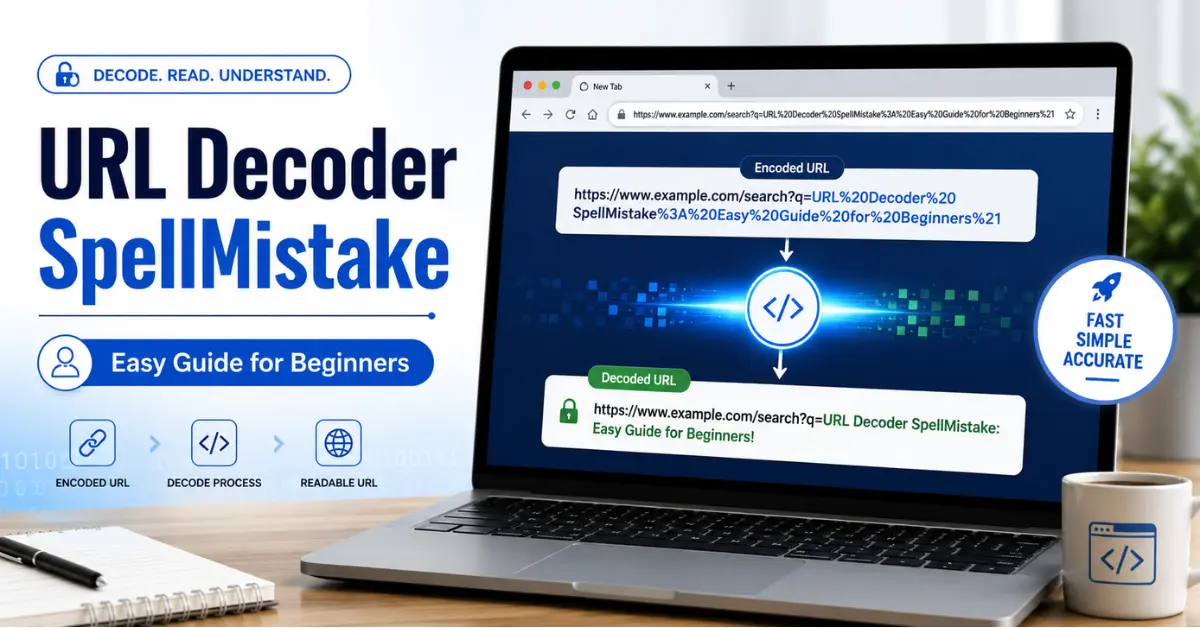
Have you ever copied a link and seen strange symbols like %20, %3F, or %2F inside the URL? Many people become confused when they see these encoded characters. This is why users often search for terms like “url decoder spellmistake” while trying to understand or fix encoded web links.
URL decoding may sound technical, but it is actually simple once you understand the basics. Developers, bloggers, SEO experts, marketers, and regular internet users all work with encoded URLs every day. A URL decoder helps convert unreadable encoded text back into normal readable text.
In this guide, you will learn:
- What URL decoding means
- Why URLs become encoded
- Common URL spelling mistakes
- SEO benefits of clean URLs
- Security risks hidden inside encoded links
- Real-world examples
- Best tools and practices
This article also includes information most competitor articles miss, including browser behavior, phishing protection, analytics tracking, API usage, and advanced decoding problems.
What Is URL Encoding?

URL encoding is a method used to convert special characters into a safe format that web browsers and servers can understand correctly.
Web addresses cannot contain certain symbols or spaces directly. Because of this, browsers replace unsafe characters with encoded values.
For example:
- Space = %20
- @ = %40
- ? = %3F
- / = %2F
- = %23
These encoded values help websites transfer information safely between systems.
Simple Example
Normal URL:
https://example.com/search?query=best seo tools
Encoded URL:
https://example.com/search?query=best%20seo%20tools
The spaces are replaced with %20 so the browser can process the URL correctly.
You May Also Like It:
ACT English Grammar Rules – Simple Study Guide
English Grammar Sentence Structure Rules Guide
Practical Writing Tips for Better Content Writing
What Is a URL Decoder?
A URL decoder is a tool that converts encoded URLs back into readable text.
It helps users:
- Understand encoded links
- Read tracking parameters
- Fix broken URLs
- Analyze redirects
- Debug website problems
Example of URL Decoding
Encoded URL:
https%3A%2F%2Fexample.com%2Fblog%2Fseo%20guide
Decoded URL:
https://example.com/blog/seo guide
This makes the link easier to understand and manage.
Why Do URLs Get Encoded?
Many internet users think encoded URLs are errors, but encoding is actually normal.
Here are the main reasons URLs get encoded.
1. Safe Data Transfer
Special characters can break URLs if they are not encoded properly.
2. Browser Compatibility
Different browsers process characters differently. Encoding keeps URLs consistent.
3. Form Submissions
When users submit forms online, the data is often encoded automatically.
4. Tracking and Analytics
Marketing tools add encoded tracking parameters to URLs.
5. API Communication
Applications and APIs use encoding to safely send data between systems.
Common URL Decoder SpellMistake Searches
Many users accidentally type incorrect search terms while looking for decoding tools.
Common mistakes include:
- url decorder
- url deocder
- url decoder spellmistake
- decoder url
- decode url error
- url decoder tool wrong
Using the correct spelling helps users find accurate tools and better resources.
Difference Between URL Encoding and URL Decoding
Many beginners confuse encoding and decoding.
URL Encoding
Encoding changes readable text into safe web format.
Example:
hello world → hello%20world
URL Decoding
Decoding changes encoded text back into readable format.
Example:
hello%20world → hello world
Both processes are important for websites and online communication.
Most Common URL Encoding Problems
Several issues can happen when working with encoded URLs.
Double Encoding
This happens when already encoded text gets encoded again.
Example:
%2520
First decode:
%20
Second decode:
(space)
Double encoding is common in redirects and APIs.
Broken URLs
Manual editing can remove important symbols and break links.
Invalid Characters
Unsupported characters can stop URLs from working properly.
Copy-Paste Errors
Messaging apps and editors sometimes damage encoded links during copying.
URL Decoder SpellMistake and SEO
Most competitor articles barely explain the SEO side of URL decoding. This section gives extra value.
Better URL Analysis
SEO professionals use URL decoders to inspect:
- Redirects
- Canonical links
- Query strings
- Tracking parameters
Easier Website Audits
Decoded URLs help identify:
- Broken links
- Crawl issues
- Duplicate URLs
- Redirect loops
Improved User Trust
Readable URLs look cleaner and safer for users.
Compare these examples:
Bad:
example.com/page?id=123%20%26%40%3F
Better:
example.com/seo-guide
Clean URLs improve click-through rates and user confidence.
How URL Decoding Helps Website Security
This is an area most competitor articles ignore completely.
Phishing Protection
Hackers sometimes hide dangerous websites inside encoded URLs.
A decoder helps users reveal the real destination before clicking.
Malware Detection
Security experts decode suspicious URLs found in:
- Spam emails
- Fake login pages
- Ads
- Popups
Server Log Analysis
Developers decode logs to detect suspicious activity and attacks.
URL Encoding in Browsers
Modern browsers automatically encode many characters.
For example:
- Spaces become
%20 - Unicode characters become encoded values
- Symbols get converted automatically
This happens silently in the background while users browse websites.
URL Decoding for Analytics and Marketing
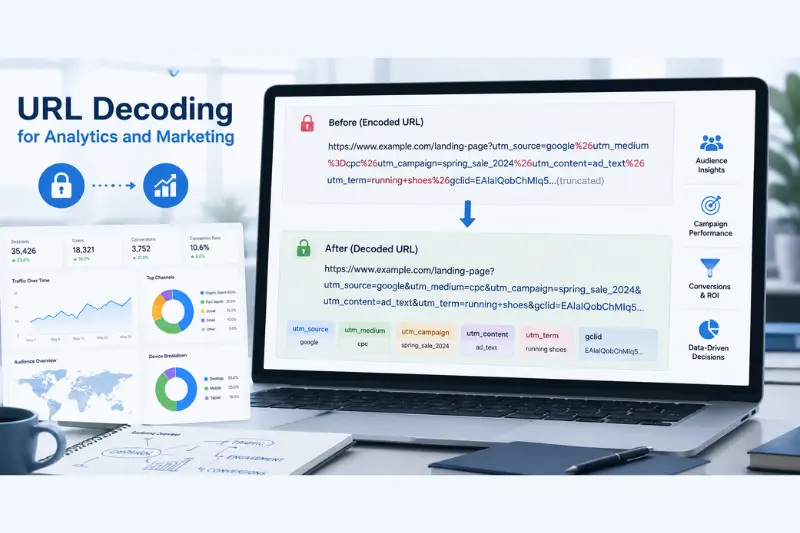
Digital marketers regularly work with encoded tracking URLs.
A URL decoder helps analyze:
- UTM parameters
- Campaign tracking
- Affiliate links
- Ad redirects
Example
Encoded tracking URL:
utm_source%3Dfacebook%26utm_campaign%3Dsummer_sale
Decoded version:
utm_source=facebook&utm_campaign=summer_sale
This makes campaign analysis easier.
URL Decoder Use Cases in Real Life
URL decoding is useful in many situations.
Bloggers and SEO Experts
They decode redirect chains and tracking links.
Developers
They debug APIs and form submissions.
Cybersecurity Teams
They inspect suspicious URLs safely.
Online Businesses
They manage cleaner URLs for customers and marketing campaigns.
URL Encoding vs Base64 Encoding
Many people think both are the same, but they are different.
URL Encoding
- Protects URLs
- Uses
%symbols - Handles unsafe web characters
Base64 Encoding
- Converts data into text format
- Often used for images and authentication
- Uses letters, numbers, and symbols
Example of Base64
SGVsbG8gV29ybGQ=
This is different from URL encoding.
Best Practices for URL Decoding
Follow these tips to avoid problems.
Use Trusted Tools
Always use reliable decoding tools.
Avoid Manual Editing
Small mistakes can break URLs.
Test URLs Before Publishing
Check all links before sharing them publicly.
Keep URLs Simple
Readable URLs improve SEO and user experience.
Avoid Double Encoding
Encoding the same content twice creates issues.
Programming Languages and URL Decoding
Most programming languages include built-in decoding functions.
JavaScript
decodeURIComponent(url)
PHP
urldecode($url)
Python
urllib.parse.unquote(url)
Java
URLDecoder.decode(url, "UTF-8");
These functions simplify URL handling for developers.
Mobile-Friendly URL Decoding
Many users browse on smartphones today.
A good URL decoder should:
- Work properly on mobile devices
- Handle long URLs smoothly
- Show readable output
- Load quickly
Responsive tools improve usability across all screen sizes.
You May Also Like It:
Best Blog Writing Tips for Better Content
Blog Content Writing Tips for SEO and Engagement
Page Size Checker by SpellMistake SEO Guide
Common Myths About URL Decoding
Myth 1: Encoded URLs Are Dangerous
Most encoded URLs are completely normal.
Myth 2: URL Encoding Hurts SEO
Search engines understand encoded URLs correctly.
Myth 3: URL Decoding Is Only for Developers
Marketers, bloggers, and regular users also use decoding tools.
Myth 4: Short URLs Never Use Encoding
Many shortened links redirect to encoded destinations.
Future of URL Encoding
Web technologies continue improving, but encoding will remain important.
Future improvements may include:
- Better browser handling
- Smarter security systems
- Cleaner URL structures
- Improved analytics tracking
As websites grow more advanced, proper URL formatting will stay essential.
Frequently Asked Questions
What does URL Decoder SpellMistake mean?
It usually refers to users searching for URL decoding tools while making spelling errors in search queries.
Why do URLs contain %20?
%20 represents a space character in encoded URLs.
Is URL decoding safe?
Yes, decoding is safe when using trusted tools and websites.
What causes broken encoded links?
Manual editing, invalid symbols, and double encoding are common causes.
Can encoded URLs affect SEO?
Poor URL management may create crawl and usability issues.
Why do marketers use URL decoders?
They analyze campaign tracking links and redirect URLs.
What is double encoding?
Double encoding happens when encoded text gets encoded again accidentally.
Do browsers automatically decode URLs?
Yes, modern browsers automatically decode many URL elements.
Why do hackers hide links with encoding?
Encoded links can hide suspicious destinations from users.
Can URL decoders help with analytics?
Yes, they help marketers inspect tracking parameters and campaign data.
Conclusion
URL decoding is an important part of modern internet usage. It helps users understand encoded links, fix broken URLs, improve SEO analysis, and stay safer online.
Many competitor articles only explain the basics. But real-world URL decoding also involves browser behavior, analytics, security, APIs, redirects, and troubleshooting.
Whether you are a beginner, blogger, marketer, developer, or SEO expert, understanding URL decoding can save time and prevent many technical issues.
A good URL decoder tool makes complex encoded links easy to read, analyze, and manage.
You May Also Like It:
Backlink Maker by Alaikas: Complete SEO Guide
Suspicious Domain Checker by Alaikas Guide
