

Introduction
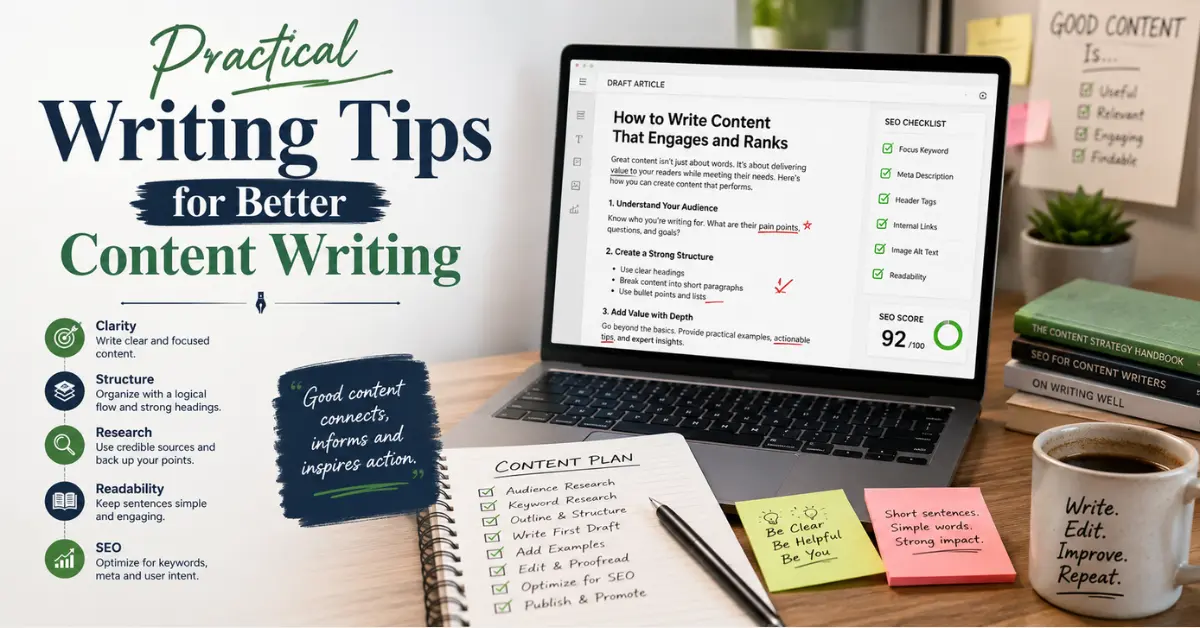
Writing can feel hard at first. You may know what you want to say, but the words do not come out clearly. This is normal. Good writing takes practice, planning, and the right method. These practical writing tips will help you write blog posts, emails, school work, social posts, and website content with more confidence.
You do not need fancy words to write well. You need clear ideas, short sentences, and helpful examples. Readers want content that solves their problem fast. They want simple words and useful points.
In this guide, you will learn practical writing tips that you can use today. You will learn how to plan, write, edit, and improve your content. Each section gives easy steps and real examples, so you can write better without stress.
1. Practical Writing Tips Start With a Clear Goal

Every strong piece of writing starts with one clear goal. Before you write, ask yourself, What do I want the reader to learn, feel, or do? This simple question can save time and improve your content.
For example, if you write a blog post about healthy snacks, your goal may look like this: “Help busy people choose quick, low-calorie snacks.” This goal keeps your writing focused. You will avoid random points and stay useful.
A clear goal also helps you choose the right tone. A school essay may need a formal tone. A blog post may need a friendly tone. A product page may need a helpful and direct tone.
Use this quick method before you start:
- Write your main topic.
- Write your reader’s problem.
- Write the result you want to give.
- Keep only points that support that result.
These practical writing tips make your content easier to plan. When your goal stays clear, your reader can follow your ideas without confusion.
You May Also Like It:
ACT English Grammar Rules – Simple Study Guide
English Grammar Sentence Structure Rules Guide
URL Decoder SpellMistake – Easy Guide for Beginners
2. Know Your Reader Before You Write
Good writing speaks to the right person. You need to know who will read your content. A beginner needs simple steps. An expert may want deeper details. If you write for everyone, your message may feel weak.
Think about your reader’s age, problem, interest, and skill level. For example, if you write for new bloggers, avoid hard terms at the start. Explain each term in plain words. If you use the word “SEO,” say that it means improving content so search engines can find it.
Ask yourself these simple questions:
- What does my reader already know?
- What problem do they want to solve?
- What words do they use?
- What answer do they need first?
These practical writing tips help you create content that feels useful. For example, instead of saying, “Improve content structure,” you can say, “Use headings so readers can scan your article fast.”
When you know your reader, your writing feels more human. You answer real questions, not random ideas.
3. Practical Writing Tips for Planning Your Content
Planning makes writing easier. Many people start writing without a plan. Then they get stuck. A simple outline helps you organize your ideas before you write full paragraphs.
Start with your main topic. Then break it into small sections. Each section should answer one clear question. For example, an article about writing can include planning, sentence length, examples, editing, and headlines.
Here is a simple blog outline:
- Introduction
- What the topic means
- Why it matters
- Step-by-step guide
- Common mistakes
- Examples
- FAQs
- Conclusion
This plan gives your article a clear path. Readers can move from one idea to the next without feeling lost.
You can also use sticky notes, a notebook, or a simple document. Write all your ideas first. Then place them in the best order.
These practical writing tips help you avoid weak content. Planning does not need much time. Even 10 minutes can improve your writing. A clear outline keeps your article focused, clean, and easy to read.
4. Use Simple Words and Short Sentences
Simple writing works best for most readers. You do not need big words to sound smart. Clear words build trust. They help readers understand your message fast.
For example, instead of writing, “Utilize this method to improve readability,” write, “Use this method to make your writing easier to read.” The second sentence feels clear and natural.
Short sentences also help. Long sentences can confuse readers. Try to keep most sentences under 20 words. You can mix short and medium sentences to keep the flow natural.
Here are helpful changes:
- Use “help” instead of “assist”
- Use “use” instead of “utilize”
- Use “start” instead of “commence”
- Use “end” instead of “terminate”
These practical writing tips make your content friendly for all readers. Simple writing does not mean weak writing. It means clear writing.
Think about a reader on a phone. They may scan your post during a break. Short lines, clear words, and simple ideas make your content easier to enjoy.
5. Practical Writing Tips for Strong Introductions
Your introduction must catch attention fast. Readers decide quickly if they want to keep reading. A good introduction tells them what the article covers and why it matters.
Start with a problem your reader knows. For example: “You may have good ideas, but your writing still feels unclear.” This line speaks to a real pain point. Then show hope: “With a few simple steps, you can write better content.”
A strong introduction should include:
- The main problem
- The promise of the article
- The focus keyword
- A reason to keep reading
Avoid long background stories. Readers want value quickly. Keep your opening short and direct.
These practical writing tips can help you write stronger openings. For example, do not start with, “Writing has existed for many years.” That feels too broad. Start with the reader’s current problem instead.
A good introduction works like a welcome sign. It tells readers, “You are in the right place.”
6. Make Your Content Easy to Scan

Most online readers do not read every word at first. They scan. They look for headings, bold points, lists, and short paragraphs. So your content must look clean.
Use H2 headings for main sections. Use H3 headings for smaller points. Add bullet points when you list steps or ideas. This layout helps readers find answers fast.
For example, compare these two styles.
Weak style:
“Good writing needs planning, editing, examples, clear words, and strong headings.”
Better style:
Good writing needs:
- Planning
- Editing
- Clear words
- Useful examples
- Strong headings
The second version looks easier. Readers can understand it faster.
These practical writing tips also help SEO. Search engines can read your structure better when you use proper headings. Readers also spend more time on clean content.
Keep paragraphs short. Two to four lines work well for blog posts. A clean page feels less tiring and more helpful.
7. Use Examples to Explain Your Ideas
Examples make writing stronger. They show readers how an idea works in real life. Without examples, advice can feel too general.
For example, saying “write clearly” helps a little. But showing a before-and-after sentence helps much more.
Before:
“Our service provides solutions for users who need content support.”
After:
“We help bloggers write clear, useful articles faster.”
The second sentence sounds more direct. It tells the reader exactly what the service does.
Use examples from daily life. You can use school work, office emails, blog posts, product reviews, or social media captions. Simple examples make your message easy to remember.
These practical writing tips also build trust. Readers feel that you know the topic because you show real use cases.
Try this method:
- Give the tip.
- Explain why it works.
- Show an example.
- Add a small action step.
This method turns basic advice into useful content. It helps readers apply what they learn right away.
8. Edit Your Writing Like a Reader
Editing improves your writing more than you may think. First drafts often contain weak sentences, repeated ideas, and unclear points. That is normal. The real improvement comes during editing.
After you finish writing, take a short break. Then read your content like a reader. Ask: Does this answer the main question? If a sentence does not help, cut it or rewrite it.
Check these areas:
- Remove repeated ideas
- Fix long sentences
- Replace hard words
- Add missing examples
- Improve headings
- Check spelling and grammar
Read your work out loud. This helps you find awkward lines. If a sentence sounds strange, rewrite it.
These practical writing tips can make your final draft much stronger. You can also use grammar tools, but do not trust them fully. You still need human judgment.
A simple edit can turn average content into clear content. Good writers do not just write. They rewrite, improve, and polish their message.
9. Practical Writing Tips for SEO Content
SEO writing means writing content that helps readers and search engines. Search engines want useful, clear, and well-structured content. Readers want answers that solve their problem.
Start with one focus keyword. For this article, the focus keyword is practical writing tips. Use it in the title, introduction, some headings, and conclusion. But use it naturally. Do not force it into every sentence.
Also use related words. These may include:
- writing skills
- content writing
- blog writing
- clear writing
- editing tips
- writing process
- reader-friendly content
Write for humans first. Search engines reward helpful content when readers find value in it.
Use this SEO checklist:
- Add the keyword in the H1.
- Add it in the first 100 words.
- Use clear H2 headings.
- Add useful examples.
- Answer common questions.
- Write a strong meta title and description.
These practical writing tips help your content rank better without stuffing keywords.
10. Avoid Common Writing Mistakes
Many writers make the same mistakes. The good news is that you can fix them with practice. One common mistake is writing too much before reaching the main point. Readers want the answer fast.
Another mistake is using hard words to sound professional. This can hurt your content. Simple words often work better because more people can understand them.
Watch out for these mistakes:
- Writing without a clear goal
- Using long paragraphs
- Repeating the same point
- Adding weak examples
- Ignoring the reader’s problem
- Skipping editing
- Using too many keywords
For example, keyword stuffing can make content feel fake. Instead of repeating practical writing tips too often, use it where it fits. Then add related terms to keep the writing natural.
A good writer respects the reader’s time. Every section should help the reader learn something useful.
Fixing these mistakes can improve your content fast. Start with one issue at a time. Small changes can create a big result.
You May Also Like It:
Best Blog Writing Tips for Better Content
Blog Content Writing Tips for SEO and Engagement
Page Size Checker by SpellMistake SEO Guide
FAQs on Practical Writing Tips
1. What are practical writing tips?
Practical writing tips are simple methods that help improve writing clarity and quality.
2. Why is simple writing important?
Simple writing helps readers understand content quickly and easily.
3. How can I improve my writing skills?
Practice daily, read more, and edit your work carefully.
4. Should I use short paragraphs?
Yes. Short paragraphs make content easier to read online.
5. Why do headings matter in writing?
Headings help readers scan and understand content faster.
6. What is the best way to start an article?
Start with a clear problem, question, or useful fact.
7. How does editing improve writing?
Editing removes mistakes and makes ideas clearer.
8. Can examples make writing better?
Yes. Examples help readers understand ideas in real situations.
9. What is SEO writing?
SEO writing helps content rank better in search engines.
10. How often should I practice writing?
Practice regularly to improve speed, clarity, and confidence.
Conclusion
Good writing does not depend on fancy words. It depends on clear thinking, simple language, and useful structure. These practical writing tips can help you write better blog posts, emails, website pages, and social content.
Start with a clear goal. Know your reader. Create a simple outline. Use short sentences. Add real examples. Then edit your work with care. These steps make your writing easier to read and more helpful.
You do not need to become perfect in one day. Practice one tip at a time. The more you write, the more confident you will feel.
If you want better results, focus on the reader first. Ask, “Does this help someone?” If the answer is yes, your writing is on the right path.
You May Also Like It:
Best Blog Writing Tips for Better Content
