

Introduction
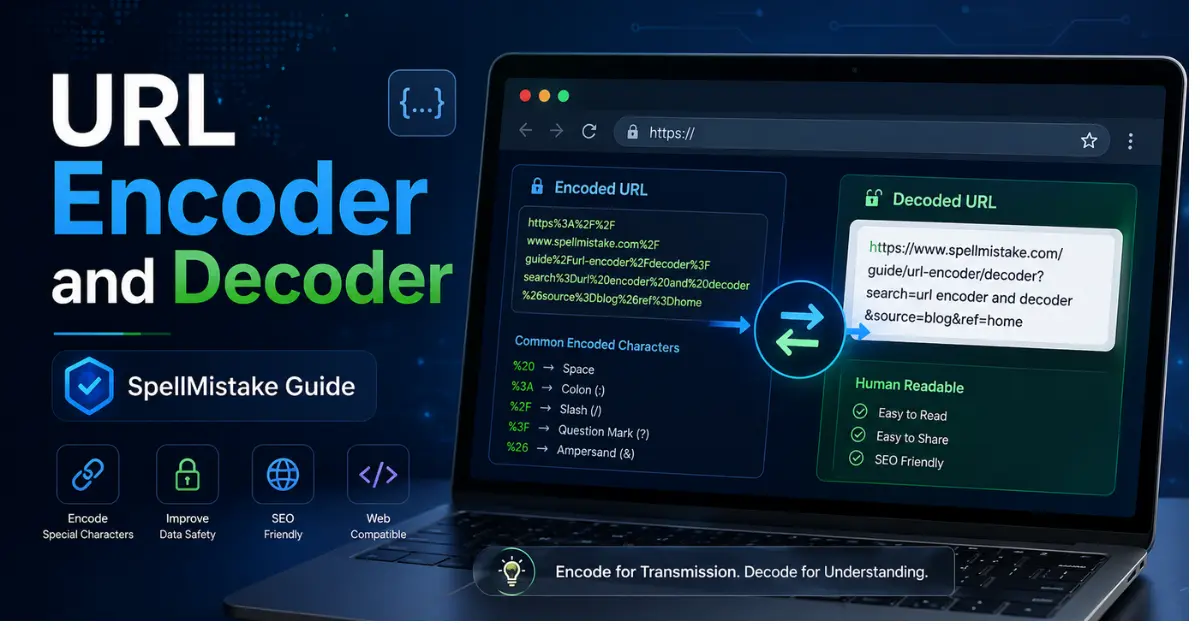
The phrase url encoder and decoder spellmistake has become popular because many people face URL formatting problems while working online. Developers, bloggers, SEO experts, students, and website owners often deal with encoded URLs without fully understanding how they work.
A small encoding mistake can break links, damage API requests, create SEO problems, and stop webpages from loading correctly. Many users search for solutions after seeing strange symbols like %20, %3F, or %26 inside URLs.
The good news is that URL encoding and decoding are easy to understand once you learn the basics.
This guide explains everything in simple English. You will learn what URL encoding means, why encoding mistakes happen, how they affect SEO, how developers fix them, and how to avoid common problems in the future.
What Is URL Encoding?
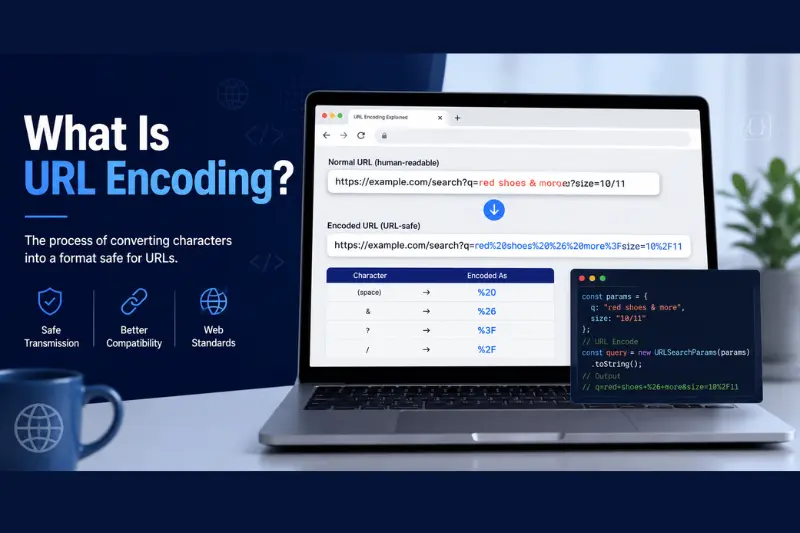
URL encoding is a process that converts unsafe characters into a format browsers and servers can understand safely.
Some characters cannot appear directly inside a URL because they have special meanings online. URL encoding replaces those characters with special codes.
For example:
- Space becomes
%20 @becomes%40&becomes%26?becomes%3F
These codes help browsers transfer information correctly between users and websites.
Without encoding, many URLs would break or behave incorrectly.
You May Also Like It:
ACT English Grammar Rules – Simple Study Guide
English Grammar Sentence Structure Rules Guide
Practical Writing Tips for Better Content Writing
What Is URL Decoding?
URL decoding is the reverse process.
It converts encoded symbols back into readable text.
For example:
Encoded:hello%20world
Decoded:hello world
Decoding helps browsers and applications display normal text to users.
What Does URL Encoder and Decoder SpellMistake Mean?
A url encoder and decoder spellmistake happens when encoded characters are written incorrectly or processed the wrong way.
Even a tiny error can create:
- Broken links
- Failed redirects
- API request problems
- 404 errors
- SEO issues
- Security risks
For example:
Correct:hello%20world
Incorrect:hello%2oworld
The second example uses the letter “o” instead of zero. This small mistake changes the entire URL structure.
Why URL Encoding Matters
URL encoding plays a major role in modern websites and applications.
Here’s why it matters:
Safe Data Transfer
Browsers need safe formatting rules when transferring information online.
Encoding protects data during transmission.
Better SEO
Search engines prefer clean and properly formatted URLs.
Broken URLs caused by encoding mistakes may reduce search visibility.
API Communication
APIs use encoded URLs to transfer data between systems.
Incorrect formatting can stop APIs from working.
Browser Compatibility
Different browsers handle characters differently.
Encoding keeps URLs consistent across devices and browsers.
Security Protection
Encoding helps reduce risks related to malformed URLs and dangerous characters.
Common Causes of URL Encoder and Decoder SpellMistake
Many encoding problems happen because users manually edit URLs without understanding encoding rules.
Manual Typing Errors
This is the most common problem.
Examples:
%2Ginstead of%20- Missing
% - Using letters instead of numbers
Double Encoding
Double encoding happens when already encoded text gets encoded again.
Correct:hello%20world
Incorrect:hello%2520world
This often breaks redirects and tracking links.
Copy and Paste Problems
Sometimes copied links contain hidden characters from documents or chat apps.
These invisible symbols may damage URLs.
Wrong Encoding Format
Confusing UTF-8, ASCII, or Unicode can create formatting problems.
Mixing Encoded and Normal Text
Some users partially encode URLs while leaving other sections unchanged.
This creates inconsistent formatting.
URL Encoder vs URL Decoder
Many beginners confuse encoding and decoding.
Here is a simple comparison:
| Feature | URL Encoder | URL Decoder |
|---|---|---|
| Purpose | Converts text into safe URL format | Converts encoded text into readable format |
| Example | Space → %20 | %20 → Space |
| Used For | Safe transmission | Reading encoded text |
| Common Users | Developers, websites, APIs | Users, browsers, debugging tools |
Understanding this difference helps avoid many formatting mistakes.
Real Examples of URL Encoding Mistakes
Example 1: Space Error
Incorrect:my file.pdf
Correct:my%20file.pdf
Spaces break URLs if not encoded properly.
Example 2: Ampersand Error
Incorrect:brand=Dolce&Gabbana
Correct:brand=Dolce%26Gabbana
Without encoding, browsers treat & as a separator.
Example 3: Email Encoding
Incorrect:email=user@example.com
Correct:email=user%40example.com
The @ symbol should be encoded inside query parameters.
Example 4: Double Encoding
Incorrect:hello%2520world
Correct:hello%20world
This problem happens frequently in redirects.
How URL Encoding Affects SEO
Many competitors barely explain this area properly, but URL encoding has a strong connection with SEO.
Broken Pages
Encoding mistakes may create 404 errors.
Search engines dislike broken pages.
Duplicate URLs
Incorrect encoding sometimes creates multiple versions of the same page.
Example:
/post-name/post%2Dname
This splits ranking signals.
Crawl Problems
Search engine bots may fail to crawl pages correctly if internal URLs contain encoding mistakes.
Lower Click-Through Rate
Users trust clean URLs more than confusing encoded links.
Bad URLs often receive fewer clicks.
Wasted Crawl Budget
Google may waste time crawling broken encoded URLs instead of important pages.
URL Encoding in APIs
Most competitor articles ignored this important topic.
APIs depend heavily on proper URL encoding.
For example:
https://example.com/search?q=blue shoes
Correct encoded version:
Without encoding, APIs may reject requests or return incorrect results.
API developers usually use automatic encoding functions to prevent errors.
URL Encoding in WordPress
WordPress websites also face encoding problems.
Common WordPress issues include:
- Broken permalinks
- Invalid redirects
- Plugin conflicts
- Encoded media URLs
- Search query problems
WordPress plugins sometimes automatically encode URLs incorrectly.
This can create SEO issues if not monitored carefully.
Website owners should regularly test internal links and redirects.
Best Tools to Avoid URL Encoder and Decoder SpellMistake
Using trusted tools reduces human error.
Browser Developer Tools
Chrome and Firefox developer tools help inspect URLs and network requests.
Online URL Encoders
Online tools quickly encode and decode URLs safely.
Useful features include:
- Instant conversion
- UTF-8 support
- Error checking
- Copy-ready output
Programming Functions
Most programming languages include built-in encoding tools.
JavaScript
encodeURIComponent("hello world")
Python
urllib.parse.quote("hello world")
PHP
urlencode("hello world")
Automatic functions are much safer than manual encoding.
Difference Between encodeURI and encodeURIComponent
Most competitor articles completely missed this section.
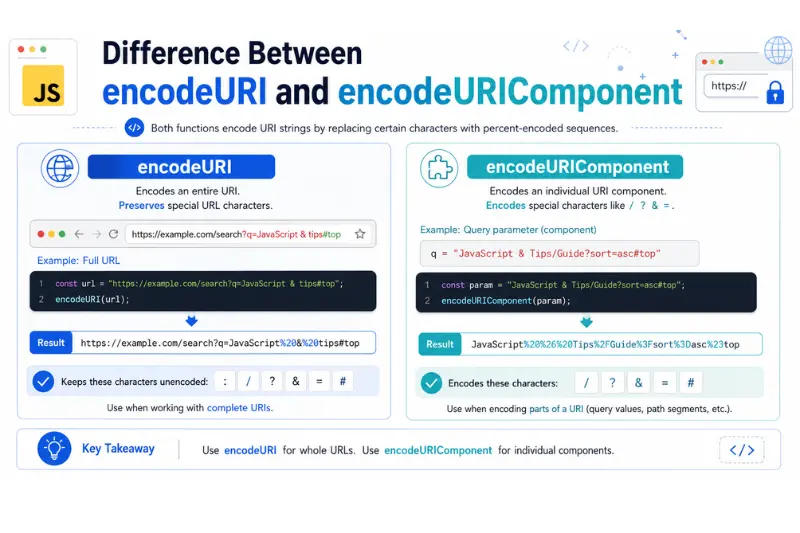
JavaScript provides two important functions.
encodeURI()
Used for entire URLs.
It keeps symbols like:
/:?
unchanged.
encodeURIComponent()
Used for URL parameters only.
It encodes almost every special character.
Example
encodeURI("https://example.com/search?q=hello world")
encodeURIComponent("hello world")
Using the wrong function can break URLs.
How Developers Troubleshoot Encoding Problems
Professional developers follow a step-by-step process.
Step 1: Inspect the URL
Look for broken symbols or suspicious formatting.
Step 2: Decode the URL
Convert encoded text back into readable format.
Step 3: Find the Mistake
Check for:
- Missing
% - Double encoding
- Invalid characters
Step 4: Re-Encode Correctly
Use trusted encoding functions.
Step 5: Test the URL
Always test links after fixing them.
Security Risks of Bad URL Encoding
This is another important topic most competitor articles ignored.
Incorrect URL encoding can create security risks.
Broken Authentication
Encoding errors may break login systems.
Open Redirect Problems
Attackers sometimes abuse poorly encoded redirect URLs.
Invalid Form Data
Bad encoding may damage submitted form information.
Data Corruption
Incorrect character handling may corrupt stored data.
Good encoding improves website safety.
Best Practices to Prevent URL Encoder and Decoder SpellMistake
Use Automatic Encoding
Avoid manual encoding whenever possible.
Keep URLs Simple
Short URLs reduce formatting mistakes.
Avoid Special Characters
Clean slugs improve readability and SEO.
Test URLs Before Publishing
Always verify important links.
Use UTF-8 Encoding
UTF-8 supports modern character formatting safely.
Monitor Website Logs
Logs help detect repeated encoding problems.
Train Team Members
Everyone handling URLs should understand basic encoding rules.
Future of URL Encoding
Modern websites are becoming more dynamic every year.
As APIs, mobile apps, AI tools, and cloud systems continue growing, URL encoding will remain extremely important.
Future systems may automate encoding better, but developers and website owners still need basic knowledge to troubleshoot issues correctly.
Understanding URL encoding today helps users build safer and more reliable websites tomorrow.
You May Also Like It:
Best Blog Writing Tips for Better Content
Blog Content Writing Tips for SEO and Engagement
Page Size Checker by SpellMistake SEO Guide
Frequently Asked Questions
What is a url encoder and decoder spellmistake?
It refers to formatting mistakes made while encoding or decoding URLs.
Why do encoded URLs contain percentage symbols?
Percentage symbols represent encoded characters safely inside URLs.
Can URL encoding affect SEO?
Yes. Broken or incorrectly formatted URLs may harm indexing and rankings.
What causes double encoding?
Double encoding happens when already encoded text gets encoded again accidentally.
Is URL encoding important for APIs?
Yes. APIs rely heavily on properly encoded URLs for communication.
What is UTF-8 URL encoding?
UTF-8 is a standard character format used for encoding modern web content safely.
Which is better: manual or automatic encoding?
Automatic encoding is safer and more reliable.
Can WordPress create encoding problems?
Yes. Plugins, redirects, and permalink settings may sometimes create encoding issues.
Conclusion
A url encoder and decoder spellmistake may look small, but it can create major technical problems for websites, APIs, SEO, and online applications.
Learning how URL encoding works helps users avoid broken links, failed redirects, crawl issues, and security risks. Whether you are a beginner developer, blogger, marketer, or website owner, understanding encoding basics is an important online skill.
Using trusted tools, testing URLs regularly, and relying on automatic encoding functions can prevent most formatting mistakes before they become serious problems.
Clean and correctly encoded URLs improve website performance, user trust, browser compatibility, and search engine visibility.
You May Also Like It:
Backlink Maker by Alaikas: Complete SEO Guide
Suspicious Domain Checker by Alaikas Guide
