

Introduction
Website speed matters more today than ever before. People expect websites to load quickly. Search engines also prefer fast websites because they provide a better user experience. Even a small delay can increase bounce rates, reduce conversions, and hurt search rankings.
This is why many users search for tools like page size checker by spellmistake. Some people type the keyword correctly, while others make small spelling mistakes when searching online. But the goal stays the same. They want to measure website page size and improve performance.
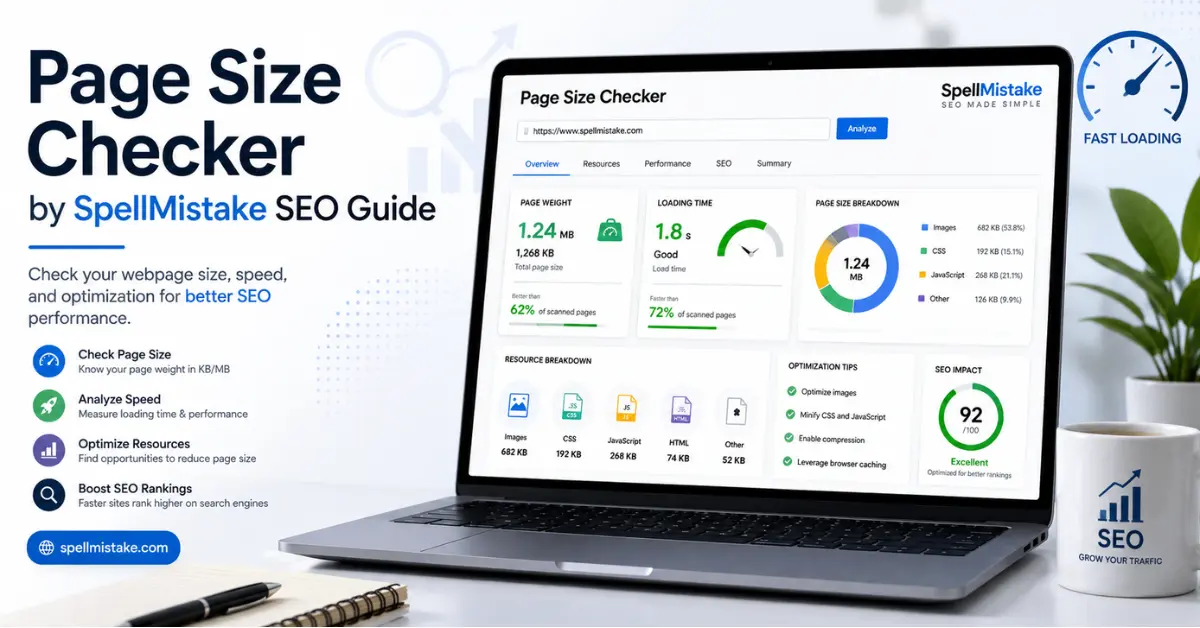
A page size checker helps website owners understand how heavy a webpage is. It measures the total size of all files loaded on a page, including images, CSS, JavaScript, fonts, videos, and other resources.
In this complete guide, you will learn:
- What page size checker by spellmistake means
- Why page size matters for SEO
- How page size affects Core Web Vitals
- The ideal page size for websites
- How to reduce page size
- The best tools for checking website size
- Common mistakes website owners make
- Practical optimization tips for WordPress and other websites
By the end of this article, you will know how to build a faster website that performs better in search engines.
What Is Page Size Checker by SpellMistake?
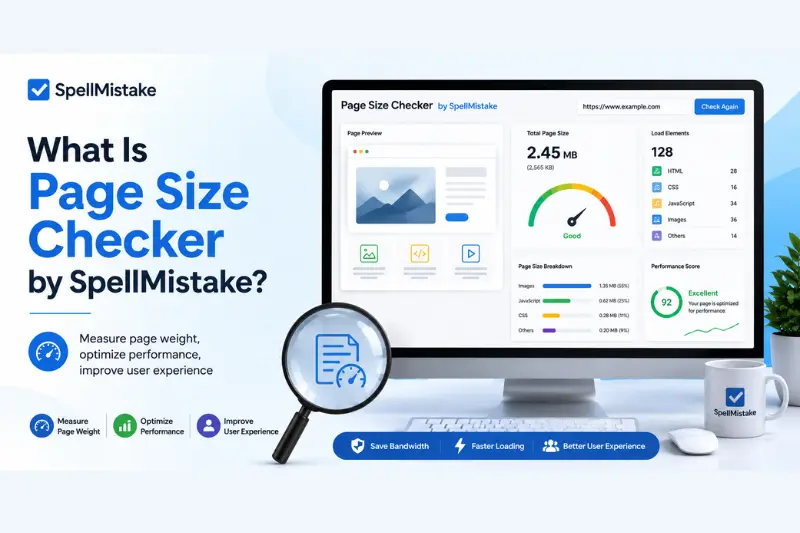
Page size checker by spellmistake is a search phrase people use when looking for a tool that checks webpage size. The phrase often appears because users accidentally misspell the keyword while searching online.
The tool itself measures the total size of a webpage. It scans all files that load when someone opens a website.
These files include:
- HTML files
- CSS stylesheets
- JavaScript files
- Images
- Videos
- Fonts
- External scripts
- Ads and tracking codes
The final result usually appears in:
- Kilobytes (KB)
- Megabytes (MB)
A smaller page size usually means a faster website.
A larger page size often causes slower loading speeds.
You May Also Like It:
ACT English Grammar Rules – Simple Study Guide
English Grammar Sentence Structure Rules Guide
Practical Writing Tips for Better Content Writing
Why Website Page Size Matters
Many website owners focus only on design and content. They forget that page size directly affects performance.
A heavy webpage creates many problems.
Slow Loading Speed
Large pages take longer to download. Visitors may leave before the page fully loads.
Research shows that many users leave websites that take more than three seconds to load.
Lower Google Rankings
Google uses page experience and Core Web Vitals as ranking factors.
A large page size can hurt:
- Largest Contentful Paint (LCP)
- Interaction to Next Paint (INP)
- Overall page speed
This can reduce visibility in search results.
Poor Mobile Experience
Mobile users often have slower internet connections.
A heavy page may work fine on desktop but become very slow on mobile devices.
Higher Bounce Rate
When pages load slowly, users leave quickly.
This increases bounce rate and lowers engagement.
Reduced Conversion Rates
Slow websites often lose leads and sales.
Even a one-second delay can reduce conversions significantly.
What Does a Page Size Checker Measure?
A page size checker scans every important resource loaded on a webpage.
Here are the main elements it measures.
HTML Size
HTML is the basic structure of your webpage.
Large HTML files may contain:
- Extra code
- Unused elements
- Poor formatting
CSS File Size
CSS controls website design and layout.
Heavy CSS files slow rendering speed.
Many websites load unused CSS that increases page size unnecessarily.
JavaScript Size
JavaScript adds functionality to websites.
But too much JavaScript creates serious performance issues.
Large scripts can block rendering and increase loading time.
Image Size
Images are usually the largest part of a webpage.
Uncompressed images can make websites extremely heavy.
Font Files
Custom fonts improve design but increase total page weight.
Loading too many fonts hurts speed.
Third-Party Scripts
Ads, chat widgets, analytics tools, and tracking scripts also increase page size.
Many websites load scripts they do not even need.
Ideal Page Size for SEO in 2026
There is no single perfect number, but experts recommend keeping websites lightweight.
Here are good targets for modern websites.
| Website Type | Recommended Size |
|---|---|
| Blog Website | Under 2 MB |
| Landing Page | Under 1 MB |
| Ecommerce Store | Under 3 MB |
| Mobile Pages | Under 1 MB |
| News Website | Under 2 MB |
Smaller pages usually perform better.
For mobile SEO, keeping pages under 1 MB is highly recommended.
How Page Size Affects Core Web Vitals
Core Web Vitals are important Google performance metrics.
Page size directly impacts these scores.
Largest Contentful Paint (LCP)
LCP measures how quickly the main content appears.
Large images and scripts slow LCP.
Google recommends:
- LCP under 2.5 seconds
Interaction to Next Paint (INP)
INP measures responsiveness.
Heavy JavaScript often causes poor INP scores.
Cumulative Layout Shift (CLS)
Large images without proper dimensions can create layout shifts.
This hurts user experience.
Reducing page size improves all these metrics.
How to Use a Page Size Checker
Using a page size checker is simple.
Step 1: Open a Page Size Tool
Use tools like:
- Google PageSpeed Insights
- GTmetrix
- Pingdom
- WebPageTest
Step 2: Enter Your Website URL
Copy and paste your webpage URL into the tool.
Step 3: Start Analysis
Click the analyze or check button.
The tool scans your webpage resources.
Step 4: Review Results
You will see:
- Total page size
- Number of requests
- Speed scores
- Large resources
Step 5: Fix Heavy Elements
Optimize the files causing slow performance.
Common Reasons Behind Large Page Size
Many websites become heavy because of avoidable mistakes.
Here are the most common causes.
Large Uncompressed Images
Uploading original camera images directly to websites creates huge file sizes.
Too Many Plugins
Some plugins load unnecessary CSS and JavaScript files.
Heavy Themes
Many WordPress themes include bloated code and animations.
Auto-Playing Videos
Videos consume large amounts of bandwidth.
Too Many Fonts
Loading multiple font families increases page weight.
Excess JavaScript
Heavy scripts slow rendering and interaction speed.
Unoptimized Ads
Ad networks often load many external scripts.
Best Ways to Reduce Website Page Size
Now let’s discuss practical solutions.
Compress Images
This is one of the fastest ways to reduce page size.
Use tools like:
- TinyPNG
- ShortPixel
- Imagify
Use WebP Images
WebP images are smaller than PNG and JPEG files.
They load much faster.
Enable Lazy Loading
Lazy loading delays image loading until users scroll down.
This improves initial loading speed.
Minify CSS and JavaScript
Minification removes unnecessary spaces and code.
This reduces file size significantly.
Remove Unused Plugins
Delete plugins you no longer use.
Unused plugins still load resources.
Use Browser Caching
Caching stores files locally in user browsers.
This improves repeat visits.
Enable GZIP Compression
GZIP reduces text-based file sizes before transfer.
Most hosting providers support it.
Use a CDN
A Content Delivery Network serves files from nearby servers.
This improves speed worldwide.
Best Free Tools Like Page Size Checker by SpellMistake
Several excellent tools help analyze website size and performance.
Google PageSpeed Insights
One of the best free SEO tools.
It provides:
- Mobile analysis
- Desktop analysis
- Core Web Vitals data
- Optimization suggestions
GTmetrix
GTmetrix provides detailed reports and waterfall analysis.
It helps identify large files quickly.
Pingdom
Pingdom is beginner-friendly and easy to understand.
WebPageTest
This tool gives advanced performance reports.
Lighthouse
Google Lighthouse provides detailed audits for:
- SEO
- Accessibility
- Performance
- Best practices
WordPress Optimization Tips
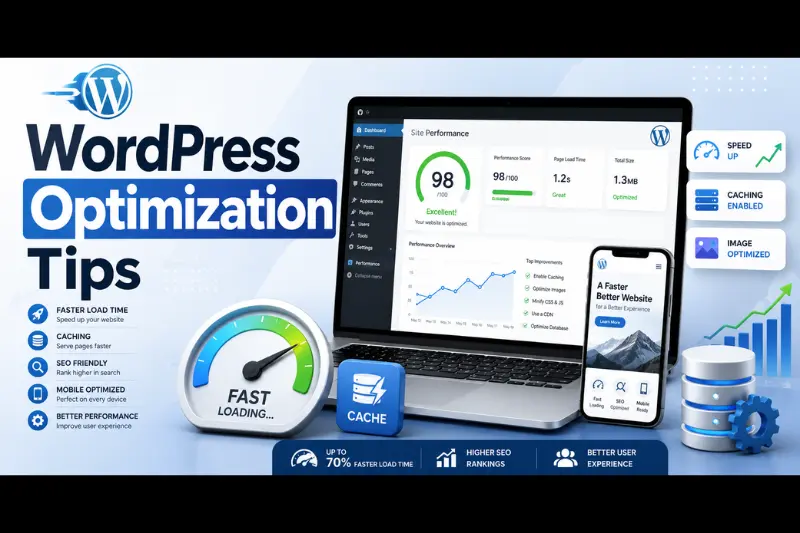
Many users searching for page size checker by spellmistake use WordPress websites.
Here are the best optimization tips for WordPress.
Use Lightweight Themes
Good lightweight themes include:
- Astra
- GeneratePress
- Kadence
Install Caching Plugins
Recommended plugins:
- WP Rocket
- LiteSpeed Cache
- W3 Total Cache
Optimize Images Automatically
Plugins like ShortPixel and Smush compress images automatically.
Avoid Page Builder Overload
Some page builders add extra CSS and JavaScript.
Keep layouts simple.
Remove Unused Themes and Plugins
Unused items still consume resources.
Mobile SEO and Page Size
Mobile optimization is now essential.
Google uses mobile-first indexing.
This means Google mainly checks your mobile website version.
Heavy pages create serious problems for mobile users.
Why Mobile Users Need Faster Pages
Mobile visitors may use:
- Slow internet
- Limited mobile data
- Older devices
Large pages increase frustration.
Mobile Optimization Tips
- Use smaller images
- Avoid large sliders
- Reduce popups
- Limit animations
- Use responsive images
Advanced Optimization Techniques
Professional developers use advanced methods to improve speed further.
Brotli Compression
Brotli is more efficient than GZIP.
It reduces file size even more.
Critical CSS
Load only the most important CSS first.
This improves perceived loading speed.
Script Delaying
Delay non-essential JavaScript until after page load.
Preload Important Resources
Preloading speeds up important files.
DNS Prefetching
This reduces connection delays for external resources.
Common Mistakes Website Owners Make
Many websites stay slow because owners ignore basic performance practices.
Uploading Full-Resolution Images
Large images create huge page sizes.
Always resize images before upload.
Ignoring Mobile Performance
Desktop speed alone is not enough anymore.
Installing Too Many Plugins
More plugins usually mean more code.
Using Cheap Hosting
Slow servers hurt performance.
Never Testing Website Speed
Many website owners never check performance regularly.
How Often Should You Check Page Size?
Website optimization should be ongoing.
You should test page size:
- After installing plugins
- After redesigning pages
- After uploading large images
- After theme updates
- At least once every month
Regular testing helps catch issues early.
You May Also Like It:
Best Blog Writing Tips for Better Content
URL Decoder SpellMistake – Easy Guide for Beginners
Page Size Checker by SpellMistake SEO Guide
Benefits of Keeping Website Page Size Small
A lightweight website provides many advantages.
Better User Experience
Fast websites feel smoother and more professional.
Improved SEO Rankings
Google prefers fast-loading websites.
Lower Bounce Rate
Users stay longer on fast websites.
More Sales and Leads
Fast pages improve conversions.
Reduced Hosting Load
Smaller pages use fewer server resources.
Future of Website Performance Optimization
Website speed will become even more important in the future.
AI-generated websites, interactive content, and advanced web apps increase page complexity.
This makes optimization more valuable than ever.
Website owners who focus on lightweight pages will gain a competitive advantage.
Frequently Asked Questions
What is page size checker by spellmistake?
It is a search term people use when looking for webpage size analysis tools, often with spelling errors.
What is the ideal page size for SEO?
Most websites should stay under 2–3 MB. Mobile pages should ideally remain under 1 MB.
Does page size affect Google rankings?
Yes. Large pages often load slowly and hurt Core Web Vitals, which impacts SEO.
Which tool is best for checking page size?
Google PageSpeed Insights and GTmetrix are excellent options.
How can I reduce page size quickly?
Compress images, minify CSS and JavaScript, and remove unnecessary plugins.
Does page size affect mobile SEO?
Yes. Mobile users often have slower internet connections, so lightweight pages perform better.
What image format is best for website speed?
WebP is one of the best modern image formats for performance.
How often should I check website page size?
Check your website monthly and after major updates.
Conclusion
Page size plays a major role in website speed, user experience, and SEO performance. Many people search for page size checker by spellmistake because they want to understand why their website feels slow and how they can improve it.
A page size checker helps identify heavy resources that slow down webpages. By optimizing images, reducing scripts, enabling caching, and improving mobile performance, website owners can create faster and more efficient websites.
In 2026, speed is no longer optional. Fast websites rank better, engage users longer, and convert more visitors into customers.
If you want stronger SEO performance and a better user experience, start monitoring your page size regularly and keep your website as lightweight as possible.
You May Also Like It:
Backlink Maker by Alaikas: Complete SEO Guide
Suspicious Domain Checker by Alaikas Guide
